



novelgroup.lu

Categories
News

Future Trends in Professional Training: Skills That Will Shape the Job Market by 2030

Future Trends in Professional Training: Skills That Will Shape the Job Market by 2030

The rapid pace of change in the job market makes continuous training essential for both professionals and businesses. Digital transformation, the green economy, and demographic shifts are creating a landscape where old skills are becoming obsolete, and new, flexible, tech-driven, and sustainable skills are in high demand. According to the World Economic Forum, around 39% of core skills will change by 2030, while only 28% of Europeans currently have more than basic digital skills.

Employers are prioritizing analytical thinking, flexibility, leadership, and technological literacy, with growing demand for AI, big data, cybersecurity, and tech specialization. At the same time, the green economy requires skills in renewable energy systems and the circular economy. Micro-credentials and lifelong learning are becoming essential for employees to remain competitive.

Professionals should invest in targeted micro-learning programs and develop soft skills such as leadership, communication, and adaptability. Businesses need to map employee skills, implement upskilling programs, and treat training as an investment rather than a cost.

NOVEL Group can support this transition with innovative training programs tailored to the needs of both businesses and professionals, helping to create a skills roadmap for 2030.

Uncover your skills.

Contact Us

+352671159001

info@novelgroup.lu

Rue de Bastogne 12, L-1217 Luxembourg

Categories
News

DIPS – Master’s Degree in the Design of Inclusive Public Space

DIPS – Master’s Degree in the Design of Inclusive Public Space

DIPS (Design of Inclusive Public Space) launches an innovative Master’s program that trains students to design inclusive, safe, and sustainable public spaces in Paraguay, Ecuador, and Argentina. Co-created by Latin American and European universities with cities, CSOs, and public authorities, it links academia to the labor market through internships and real projects. A new virtual platform, “FreeAccess City,” supports interactive learning, research, and community engagement while raising awareness of the right to accessible public space.

Uncover your skills.

Contact Us

+352671159001

info@novelgroup.lu

Rue de Bastogne 12, L-1217 Luxembourg

Categories
News

Upcoming Online Event: S.E.VET Project Brings Innovation and Social Impact to the Forefront of VET

Upcoming Online Event: S.E.VET Project Brings Innovation and Social Impact to the Forefront of VET

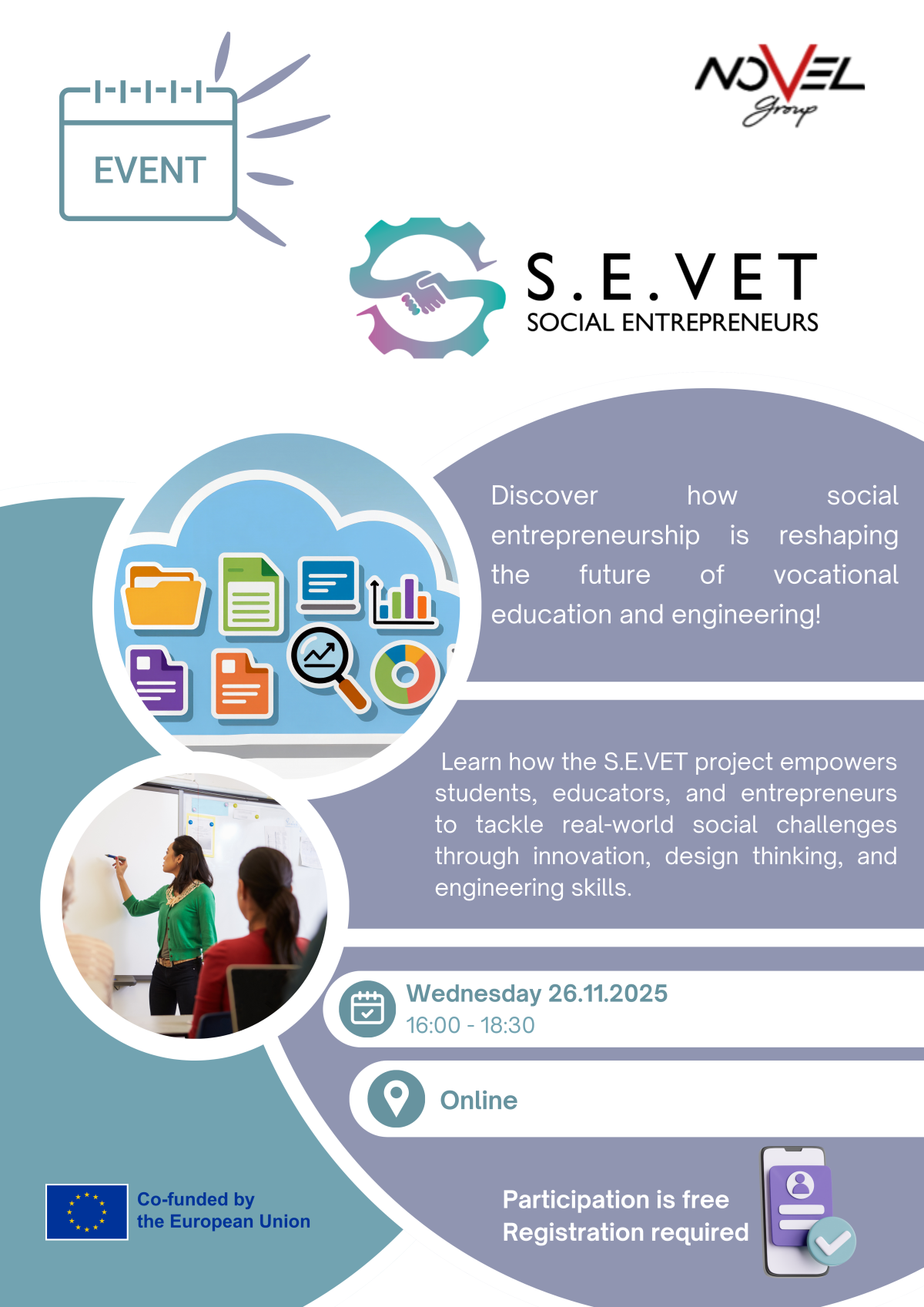
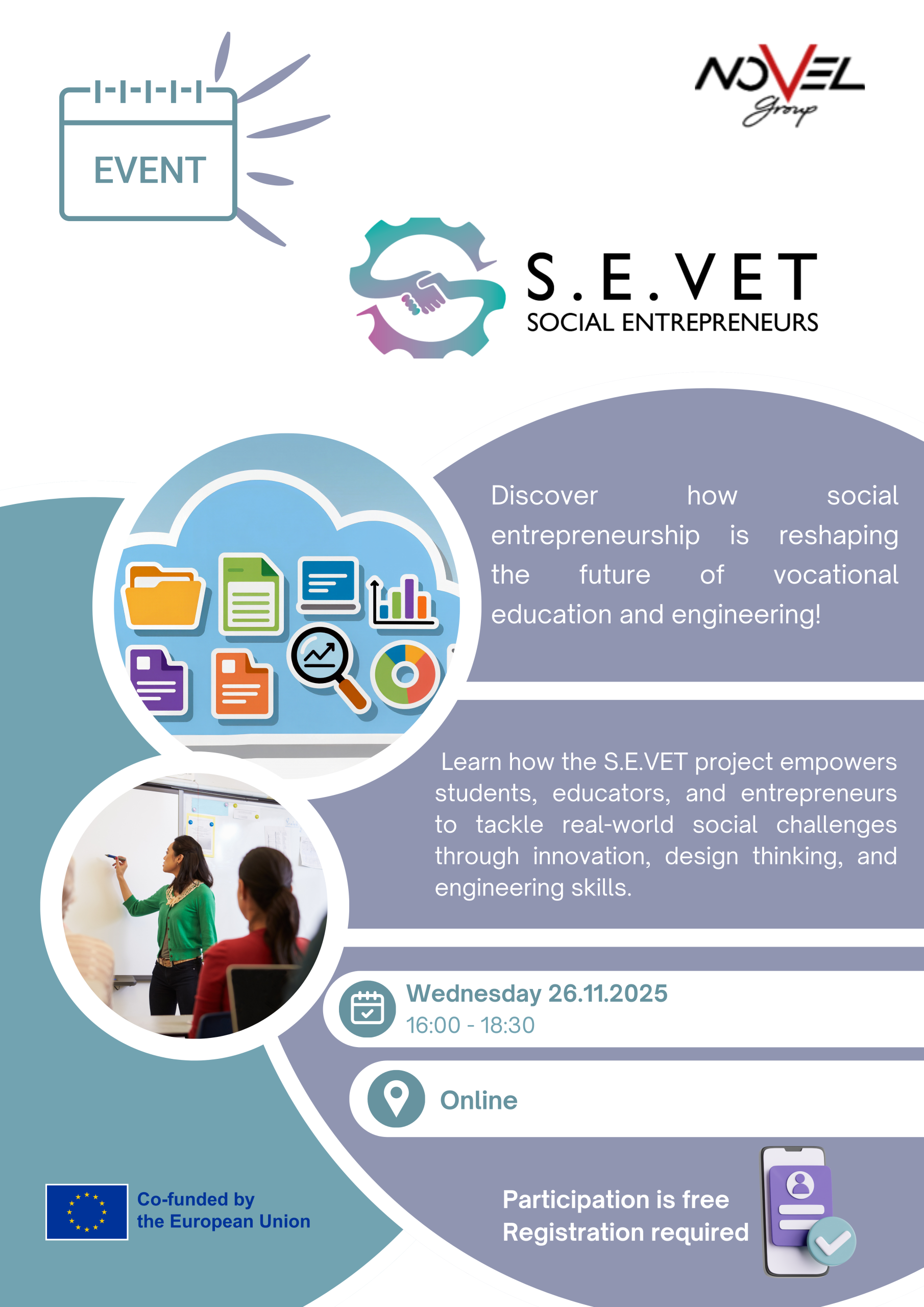
On 26 November 2025,  Novel Groups is hosting the S.E.VET national online stakeholder event, bringing together young entrepreneurs, educators, and policy stakeholders to explore how vocational training can be a driver for social innovation.


Event Highlights

  • Presentation of the S.E.VET project and its main outputs
  • A dynamic panel on AI tools and entrepreneurship
  • Live showcase of the S.E.VET Tool
  • Q&A and interactive discussion with participants


The event will provide a unique platform to discuss the future of VET, the role of social entrepreneurship, and the intersection of technology, education, and community impact.


Registration is required: https://forms.gle/XqGepLYan4TpEFoKA

Uncover your skills.

Contact Us

+352671159001

info@novelgroup.lu

Rue de Bastogne 12, L-1217 Luxembourg

Categories
News

Empowering Future Innovators: Social Entrepreneurship in Vocational Engineering Education

Empowering Future Innovators: Social Entrepreneurship in Vocational Engineering Education

In a rapidly evolving world, where social and environmental challenges demand urgent action, a new kind of entrepreneurship is emerging — one that blends innovation with impact. Known as social entrepreneurship, this approach is increasingly being integrated into vocational education and training (VET), equipping learners not only with job-ready skills but also with the mindset to make a difference. One European initiative leading this transformation is S.E.VET (Social Entrepreneurship in Vocational Education and Training), co-funded by the European Union. The project introduces social entrepreneurship principles into VET programs, helping educators and learners build ventures that serve both economic and social goals. It does so through practical resources, strategic partnerships, and a strong focus on real-world application.

A standout feature of the S.E.VET project is its Capacity Building Program (CBP), which is specifically tailored to the engineering sector in non-EU countries. Often, engineering education is rooted in technical excellence but lacks focus on social responsibility and community engagement. The CBP aims to change that. The program’s educational content blends theory and practice, offering conceptual frameworks, case studies, and practical examples of social entrepreneurship. It shows VET engineering personnel how to turn innovative ideas into sustainable ventures that solve real social problems — whether it’s improving water access in rural areas or creating low-cost renewable energy solutions. This training is particularly important for educators in non-EU countries, where access to such resources has been limited. Through S.E.VET, educators gain tools to help their students become not just technicians, but changemakers.

Unlike traditional entrepreneurship, which is driven mainly by profit, social entrepreneurship focuses on creating value for society. In the context of engineering, this means designing products, services, or systems that tackle issues like inequality, environmental degradation, or access to essential infrastructure — while remaining economically viable. By introducing this approach to vocational training, S.E.VET helps reframe the role of engineers. They are no longer just problem-solvers for industry; they become innovators for society.

The program offers a variety of tools: a comprehensive handbook for trainers, digital learning modules, and access to international training events. Participants are introduced to inspiring case studies — such as women-led tech start-ups, social cooperatives, and green energy projects — that show what social entrepreneurship can achieve when paired with engineering skills. These resources empower educators to teach complex topics like sustainability, ethical business models, and community co-design in a practical and engaging way.

The S.E.VET project is paving the way for a more inclusive, socially responsible, and innovative VET ecosystem. By integrating social entrepreneurship into engineering education, especially in underrepresented regions, it is helping to shape a new generation of professionals — capable of leading with purpose and designing solutions that matter.

To explore the project’s materials and success stories, visit www.sevet.eu.

Uncover your skills.

Contact Us

+352671159001

info@novelgroup.lu

Rue de Bastogne 12, L-1217 Luxembourg

Categories
News

The Digital Product Passport: Why the EU wants you to use it?

The Digital Product Passport: Why the EU wants you to use it?

What is the Digital Product Passport

The Digital Product Passport (DPP)  is an important tool for making information available to actors along the value chain, and its availability is expected to significantly boost a product’s end-to-end traceability throughout its value chain. DPP includes data on sustainability, production processes, repairability, chemical content, and recycling options. This digital record helps to improve transparency across the value chain and helps all actors-manufacturers, suppliers, consumers, and recyclers- make better-informed and more sustainable choices.

By providing clear and accessible environmental data, DPPs foster businesses to demonstrate their sustainability efforts, while consumers gain confidence in the products they buy. This level of transparency not only fosters better decision-making but also enhances communication along the supply chain-particularly between producers and recyclers.

 

Are There Regulations About DPP in the EU?

The DPP is being developed in conjunction with several important regulatory frameworks and strategic initiatives aimed at increasing sustainability and circularity in the EU. Before these frameworks were developed, intensive consultations and surveys with industry stakeholders and sector experts were carried out to acquire critical insights and information.

In this regard, DPP is part of a broader EU regulatory effort to make sustainability and circularity the norm and its  in major policies like the European Green Deal and Circular Economy Action Plan . Sector-specific strategies, such as the EU Strategy for Sustainable and Circular Textiles, underline the need for transparency and traceability where DPP becomes essential.

The legal foundation comes from the Ecodesign for Sustainable Products Regulation (ESPR), which enters into force in July 2024, and also the Regulation (EU) 2024/1781, adopted in June 2024, setting ecodesign requirements for sustainable products across sectors.

With the legal framework and regulations listed above, in fact, processes such as determining sector-based requirements for DPP use and technical background work have actually started much earlier, but a gradual transition is expected for full implementation. Of course, there are challenges that come with the process. For this reason, although there are improvements in the framework, DPP related implementation measurements will continue to be adopted by december 2026. Technical adjustments and updates will be possible until 2030.

It’s also  worth to mention that the  European Commission  launched the “Digital Product Passport – Prototypes” call under the Digital Europe Programme, funding pilot projects that help define how the DPP will work in practice. Just the fact that a call has been launched for a large-scale DPP project focused on technical and comprehensive scientific analysis clearly highlights the importance of DPP.

 

Why Should You Use a Digital Product Passport?

A Digital Product Passport (DPP) is a key tool in the transition to a digital circular economy. It ensures transparency across supply chains, offering clear, accessible product information. This enables businesses to make smarter choices such as selecting sustainable materials and processes.

Moreover, DPPs help accelerate supply chains by providing better data, optimizing production and logistics, and improving overall efficiency. They also foster consumer trust by providing credible, easily accessible product details.

The VETRINE project, which focuses on capacity building in the green transition, has developed a comprehensive online training programme titled Green VETRINE Course. Within this programme, Chapter 5 is fully dedicated to the Digital Product Passport. Learners gain a practical understanding of how DPPs contribute to sustainability and how businesses can adapt to meet new EU requirements.

Looking ahead, the VETRINE project will also launch FashPass, a small-scale digital tool inspired by the DPP. This upcoming solution will offer learners/green producers a hands-on experience of how DPP principles can be applied in practice, bridging the gap between theory and real-world digital innovation.


Author: Ezgi Gecin Buyukgumus
Uncover your skills.

Contact Us

+352671159001

info@novelgroup.lu

Rue de Bastogne 12, L-1217 Luxembourg

Categories
News

Behind the Seams: The Ecological Impact of Fast Fashion

Behind the Seams: The Ecological Impact of Fast Fashion

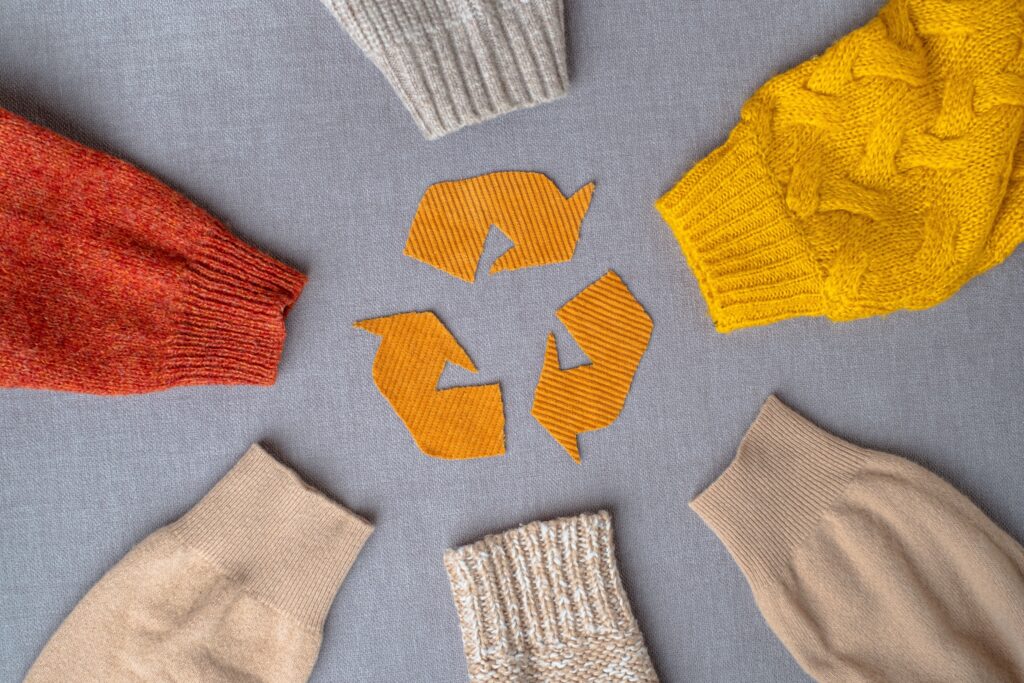
The modern fashion industry thrives on speed and volume. Fast fashion—characterized by rapidly produced, low-cost clothing inspired by the latest trends—has reshaped consumer behavior around the world. While it offers affordability and variety, the environmental costs are deeply concerning. The impact of fast fashion on the planet is severe, affecting ecosystems, contributing to climate change, and promoting unsustainable consumption patterns.

One of the most damaging effects of fast fashion is the overproduction of clothing. Brands release new collections every few weeks, encouraging consumers to continuously buy more. This cycle leads to massive amounts of clothing being discarded. In fact, it’s estimated that the average consumer throws away over 30 kilograms of clothing each year. Much of this ends up in landfills, where synthetic fabrics like polyester may take hundreds of years to break down, releasing greenhouse gases such as methane in the process. Fast fashion also places intense pressure on natural resources. The production of textiles requires vast amounts of water, energy, and land. Cotton, for example, is a water-intensive crop; producing one t-shirt can require over 2,000 liters of water. Meanwhile, synthetic materials, though less water-reliant, are petroleum-based and contribute to fossil fuel depletion. Additionally, dyeing processes pollute rivers and streams with hazardous chemicals, endangering aquatic life and the health of nearby communities. Carbon emissions from the fashion industry are another serious problem. From manufacturing to global distribution, the journey of a single garment involves extensive transportation and energy use. Factories often rely on coal-powered electricity, especially in regions with cheap labour and weak environmental regulations. These practices collectively make the fashion industry one of the top five contributors to global carbon emissions.

Beyond pollution and emissions, the environmental harm of fast fashion is tied to a culture of disposability. Clothes are designed to be worn only a few times before being thrown away. This mindset not only fuels waste but also disconnects consumers from the environmental impact of their purchases. The psychological detachment between product and planet is one of fast fashion’s most damaging legacies.Thankfully, alternatives are emerging. Sustainable fashion movements promote slower, more mindful consumption. Thrift shopping, clothing swaps, rental services, and support for ethical brands are gaining popularity. Education and awareness are key: when consumers understand the impact of their choices, they are more likely to demand accountability and sustainability from the industry.

In summary, while fast fashion may satisfy our desire for low-cost style, it comes at a high environmental price. It generates waste, drains resources, pollutes ecosystems, and drives climate change. To secure a livable future, we must shift away from this throwaway culture and embrace more conscious, sustainable fashion choices.

Uncover your skills.

Contact Us

+352671159001

info@novelgroup.lu

Rue de Bastogne 12, L-1217 Luxembourg

Categories
News

Social Media and Adolescents: Influence on Studies and Career Choices — A Trend or a New Opportunity?

Social Media and Adolescents: Influence on Studies and Career Choices — A Trend or a New Opportunity?

Social networks have become part of daily routines for adolescents in the modern online world. Instagram, TikTok, YouTube, and Snapchat are not just communication tools — they shape attitudes, habits, dreams, and even educational and professional choices. As digital natives navigate their teenage years, the impact of social media on their academic focus and career orientation is becoming more significant than ever.


Social media can serve as a powerful educational tool. With access to inspirational content, online communities, and informative videos, students are exposed to a wide range of professions, vocational paths, and learning opportunities. Many young people discover career interests through creators who share their daily work life, behind-the-scenes insights, or skill-building journeys. Whether it’s a graphic designer sharing digital artwork or a technician showcasing smart home installations, these digital stories often spark curiosity and ambition in adolescents exploring their options. However, this influence comes with a double edge. The constant exposure to idealized lifestyles and curated success stories can lead to unrealistic expectations. Adolescents might prioritize online fame over skill development, assuming that becoming an influencer is a fast track to wealth and freedom. As a result, some may neglect academic responsibilities or vocational preparation, thinking that traditional careers are less attractive or rewarding. It’s essential to recognize that being an influencer has, in many ways, evolved into a legitimate career path. The influencer marketing industry is projected to be worth billions globally, creating demand for skills such as content creation, branding, communication, analytics, and digital marketing. For students in VET programs, this could open up innovative career pathways in areas like media production, photography, social media management, and personal branding. The key lies in understanding that successful influencers are often skilled professionals who apply a mix of creativity, strategy, and consistency — not just luck or charisma. Vocational education can play a crucial role in bridging the gap between fascination and profession. By integrating digital media literacy and entrepreneurship into the curriculum, VET institutions can help students critically assess online content, set realistic goals, and explore careers in the digital economy. Rather than discouraging interest in social media, educators can guide learners toward acquiring the right tools to pursue it responsibly and sustainably — whether as a profession or as a supplementary skill. Moreover, the power of influencers can also positively shape study motivation. When content creators talk about the value of hard work, lifelong learning, or overcoming failure, they can inspire adolescents to stay focused and believe in their potential. These digital role models, when authentic and value-driven, can contribute to shaping a more informed, confident, and goal-oriented generation.


In conclusion, social media is neither inherently good nor bad — it’s a reflection of how it’s used. For adolescents, it can either distract or inspire, mislead or inform. As the line between entertainment and profession continues to blur, it is the responsibility of educators, parents, and institutions to help young people navigate this landscape wisely. Influencing may be a trend — but with the right mindset and training, it can also become a new-age profession rooted in real skills and opportunities.

Uncover your skills.

Contact Us

+352671159001

info@novelgroup.lu

Rue de Bastogne 12, L-1217 Luxembourg

Categories
News

EVTA Community Meetup: Exploring Digital Innovation in VET

EVTA Community Meetup: Exploring Digital Innovation in VET

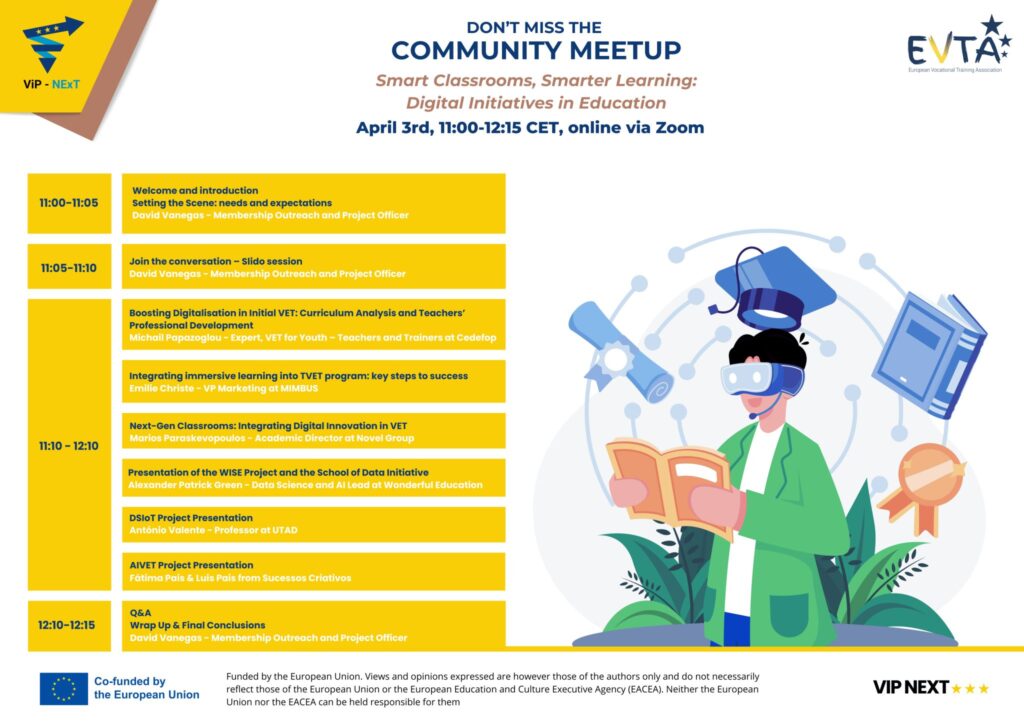
The second EVTA Community Meetup will take place on April 3rd from 11:00 – 12:15 CET. This online event will focus on the integration of digital tools in vocational education and training (VET), highlighting how emerging technologies are transforming the future of learning.

As part of the EVTA ViP-NExT Annual Work Programme, this Community Meetup will explore the integration of digital tools within VET classrooms. We will examine how emerging technologies are shaping the future of education and equipping learners for the digitalised workforce, while also addressing the challenges that must be overcome to build a more inclusive, equitable, and effective educational system.

The agenda includes informative presentations from leading experts within the EVTA network:

  • Boosting Digitalisation in Initial VET: Curriculum Analysis and Teachers’ Professional Development by Michail Papazoglou, Expert at Cedefop
  • Integrating Immersive Learning into TVET Programs: Key Steps to Success by Emilie Christe, VP Marketing at MIMBUS
  • Next-Gen Classrooms: Integrating Digital Innovation in VET by Marios Paraskevopoulos, Academic Director at NOVEL Group
  • Presentation of the WISE Project and the School of Data Initiative by Alexander Patrick Green, Data Science and AI Lead at Wonderful Education
  • DSIoT Project Presentation by António Valente, Professor at Universidade de Trás-os-Montes e Alto Douro (UTAD)
  • AIVET Project Presentation by Fátima Pais & Luis Pais from Sucessos Criativos

This event will provide valuable insights into the integration of digital tools in VET, helping to shape the future of education. Don’t miss the opportunity to be part of this important discussion.

Register now at: https://docs.google.com/forms/d/e/1FAIpQLSeP5sBpF9DXz9tXiiCaKesc8UK_JQUbY2iQsFtNSC2Pa9Xiog/viewform

Uncover your skills.

Contact Us

+352671159001

info@novelgroup.lu

Rue de Bastogne 12, L-1217 Luxembourg

Categories
News

Driving Social Change Through Entrepreneurship: Insights from Europe

Driving Social Change Through Entrepreneurship: Insights from Europe

Social enterprises are pivotal in addressing societal challenges by integrating innovative business strategies with a steadfast commitment to social impact. In the European Union (EU), these organizations significantly bolster economic development and foster social cohesion. This article delves into the current landscape of social enterprises across Europe, with a particular focus on Luxembourg, highlighting their contributions, challenges, and growth prospects.

The EU’s social economy is robust, comprising a diverse array of enterprises and organizations such as cooperatives, mutuals, associations, foundations, and social enterprises. According to Social Economy Europe collectively, these entities number approximately 2.8 million and employ around 13.6 million individuals, representing about 8% of the EU’s GDP.

The prominence of social enterprises varies among EU member states. For instance, Belgium, Hungary, Italy, and Luxembourg each host over 1,500 social enterprises per million inhabitants. In contrast, countries like Estonia, Greece, and Malta have fewer than 500 per million inhabitants.

Luxembourg exemplifies a strong commitment to social entrepreneurship within the EU. According to European Commission estimates, Luxembourg hosts between 916 and 932 social enterprises. These entities employed nearly 6% of the country’s total wage earners, with an annual growth rate of nearly 2% since 2012. In 2023, 54% of entrepreneurs in Luxembourg declared active engagement in maximizing social impact, and 66% reported active efforts in minimizing environmental impact. This positions Luxembourg favorably in cross-country rankings of social entrepreneurship commitment.

Despite their contributions, many social enterprises face financial challenges. In Europe, nearly 75% of social enterprises surveyed are seeking external financing, including grants, equity, and debt financing. Typically, these enterprises seek funding amounting to about 75% of their yearly revenue. In Luxembourg, the vast majority (92%) of social enterprises are micro or small firms, predominantly active in collective social and personal services (64.6%) and health and social work (23.5%). However, the overall number of social enterprises has remained substantially unchanged since 2012, indicating potential challenges in scaling and sustaining these organizations.

Social enterprises in Europe, particularly in Luxembourg, play a crucial role in driving social and economic development. While they face challenges, their impact on employment, social cohesion, and innovation is undeniable. Continued support and recognition of their value are essential for sustaining and enhancing their contributions to society.


Visit out S.E.VET Project website for more.


Uncover your skills.

Contact Us

+352671159001

info@novelgroup.lu

Rue de Bastogne 12, L-1217 Luxembourg

Categories
News

Lifelong Learning in Luxembourg: How Micro-Credentials Are Shaping the Future of VET

Lifelong Learning in Luxembourg: How Micro-Credentials Are Shaping the Future of VET

In an era of rapid technological change and shifting labor market demands, the ability to continuously upskill and reskill has become a cornerstone of professional success. Luxembourg’s Vocational Education and Training (VET) system is at the forefront of this transformation, integrating micro-credentials as a flexible and targeted approach to lifelong learning.

Micro-credentials are brief, specialized qualifications that enable students to pick up particular skills within a short period. Unlike conventional degrees or diplomas, they emphasize competency-based learning and are designed to suit industry requirements. This is especially applicable in the dynamic economy of Luxembourg, where industries like finance, ICT, and sustainability are constantly changing.

Luxembourg is deeply committed to lifelong learning, and there are policies encouraging continuous professional growth. Micro-credentials in the VET system serve several vital functions. Firstly, they bridge skills gaps by providing highly specialized education in areas such as AI, cybersecurity, renewable energy, and fintech, enabling companies to quickly train experts without requiring them to undergo long periods of study. Second, micro-credentials enhance career mobility in Luxembourg’s multilingual and international workforce by offering flexibility for workers transitioning into new career roles. Finally, they enhance workforce competitiveness by allowing professionals to stack certifications and build their expertise, keeping pace with global trends.

The government and vocational training schools are actively adopting micro-credentials into vocational education. The Chamber of Commerce, the Luxembourg Lifelong Learning Center (LLLC), and other VET schools offer specialized short courses that employers appreciate and are linked with EU-wide certification systems. In addition, initiatives such as Erasmus+ VET mobility programs provide international opportunities, giving Luxembourg workers a competitive edge in Europe.

As the work environment evolves, micro-credentials will play an increasingly vital role in keeping people and businesses ahead of the game. By investing in lifelong learning and upskilling, Luxembourg’s VET system is not only preparing its workers for the future but cementing the country as a driving force in innovation and human capital growth.

Uncover your skills.

Contact Us

+352671159001

info@novelgroup.lu

Rue de Bastogne 12, L-1217 Luxembourg