
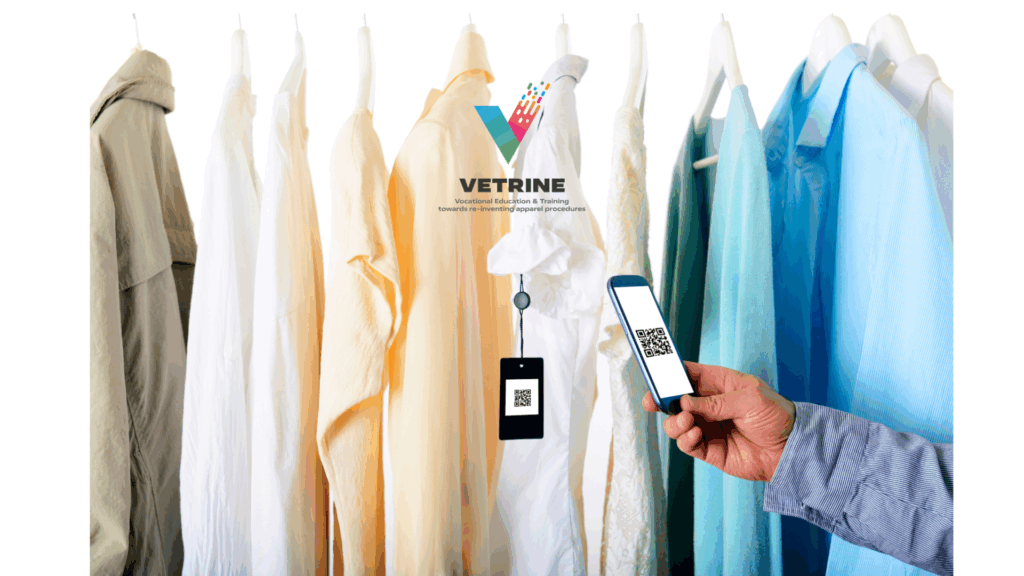
What is the Digital Product Passport
The Digital Product Passport (DPP) is an important tool for making information available to actors along the value chain, and its availability is expected to significantly boost a product’s end-to-end traceability throughout its value chain. DPP includes data on sustainability, production processes, repairability, chemical content, and recycling options. This digital record helps to improve transparency across the value chain and helps all actors-manufacturers, suppliers, consumers, and recyclers- make better-informed and more sustainable choices.
By providing clear and accessible environmental data, DPPs foster businesses to demonstrate their sustainability efforts, while consumers gain confidence in the products they buy. This level of transparency not only fosters better decision-making but also enhances communication along the supply chain-particularly between producers and recyclers.

Are There Regulations About DPP in the EU?
The DPP is being developed in conjunction with several important regulatory frameworks and strategic initiatives aimed at increasing sustainability and circularity in the EU. Before these frameworks were developed, intensive consultations and surveys with industry stakeholders and sector experts were carried out to acquire critical insights and information.
In this regard, DPP is part of a broader EU regulatory effort to make sustainability and circularity the norm and its in major policies like the European Green Deal and Circular Economy Action Plan . Sector-specific strategies, such as the EU Strategy for Sustainable and Circular Textiles, underline the need for transparency and traceability where DPP becomes essential.
The legal foundation comes from the Ecodesign for Sustainable Products Regulation (ESPR), which enters into force in July 2024, and also the Regulation (EU) 2024/1781, adopted in June 2024, setting ecodesign requirements for sustainable products across sectors.
With the legal framework and regulations listed above, in fact, processes such as determining sector-based requirements for DPP use and technical background work have actually started much earlier, but a gradual transition is expected for full implementation. Of course, there are challenges that come with the process. For this reason, although there are improvements in the framework, DPP related implementation measurements will continue to be adopted by december 2026. Technical adjustments and updates will be possible until 2030.
It’s also worth to mention that the European Commission launched the “Digital Product Passport – Prototypes” call under the Digital Europe Programme, funding pilot projects that help define how the DPP will work in practice. Just the fact that a call has been launched for a large-scale DPP project focused on technical and comprehensive scientific analysis clearly highlights the importance of DPP.

Why Should You Use a Digital Product Passport?
A Digital Product Passport (DPP) is a key tool in the transition to a digital circular economy. It ensures transparency across supply chains, offering clear, accessible product information. This enables businesses to make smarter choices such as selecting sustainable materials and processes.
Moreover, DPPs help accelerate supply chains by providing better data, optimizing production and logistics, and improving overall efficiency. They also foster consumer trust by providing credible, easily accessible product details.
The VETRINE project, which focuses on capacity building in the green transition, has developed a comprehensive online training programme titled Green VETRINE Course. Within this programme, Chapter 5 is fully dedicated to the Digital Product Passport. Learners gain a practical understanding of how DPPs contribute to sustainability and how businesses can adapt to meet new EU requirements.
Looking ahead, the VETRINE project will also launch FashPass, a small-scale digital tool inspired by the DPP. This upcoming solution will offer learners/green producers a hands-on experience of how DPP principles can be applied in practice, bridging the gap between theory and real-world digital innovation.
Author: Ezgi Gecin Buyukgumus